
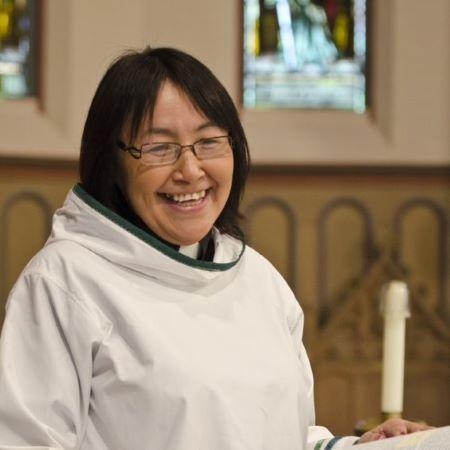
Bishop Annie Ittoshat
MDiv, 2013
I am originally from the northern community of Kuujjuarapik. I worked as a housing manager, then studied social work in Montreal.
Through a dream, God called me to Christian ministry. After a number of years of study and service, I came to pursue an MDiv at Wycliffe College, at the suggestion of a friend. I questioned whether I should continue at Wycliffe because the day I arrived in Toronto, my mother passed away. But one semester I was in a course on pastoral care, when I had a sense of peace and knew I was where I had to be. I became the first Inuk to graduate from Wycliffe.
At this moment I am a Suffragan Bishop overseeing 15 communities. Wycliffe prepared me to stand firm in the Lord no matter what situation I am in.
My favourite part of Wycliffe is the staff and teachers who are down to earth and understand where you are at.

test
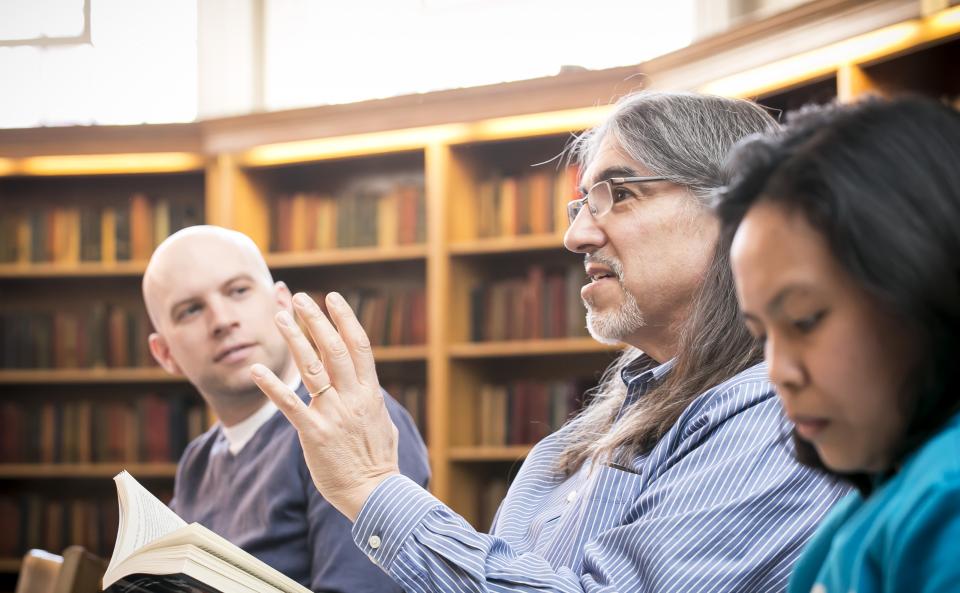
Join us for a candid discussion, at Wycliffe College, around the challenge of advances in medicine and technology in an increasingly secular society. Join Carl Trueman, Joseph L. Graves Jr., Farr Curlin, and Andreae Sennyah as they discuss some of the nuances of how these developments press into our core values as a society. “What it means to be human?” is one of the enduring questions that underscores our search to find meaning in our lives and govern how we relate to one another in our society. How this question is answered has varied throughout human history and the distinctions in the answers have only proliferated in our current age. As our society becomes more complex, our scientific understanding of our biology becomes more comprehensive, and our technologies are increasingly able to augment our existence, our ability to answer this question and, maybe, more importantly, our ability to navigate the practical implications of this understanding has become progressively more difficult. Traditional theological perspectives and ethical approaches need to re-engage these changes while at the same time, the applications of these new technological and social innovations need to be understood in theological and ethical perspectives. "How can science inform our Christian anthropology and practice of ministry?" and "How does a Christian theological vision create goals and limits for medicine and science?" These overarching questions govern a host of other related questions around the intrinsic value of the human person, the nature of the image of God, the responsibility to maintain human dignity, the ethical scope of new technologies, and the engagement of human suffering in society.
Join us for a candid discussion, at Wycliffe College, around the challenge of advances in medicine and technology in an increasingly secular society. Join Carl Trueman, Joseph L. Graves Jr., Farr Curlin, and Andreae Sennyah as they discuss some of the nuances of how these developments press into our core values as a society. “What it means to be human?” is one of the enduring questions that underscores our search to find meaning in our lives and govern how we relate to one another in our society. How this question is answered has varied throughout human history and the distinctions in the answers have only proliferated in our current age. As our society becomes more complex, our scientific understanding of our biology becomes more comprehensive, and our technologies are increasingly able to augment our existence, our ability to answer this question and, maybe, more importantly, our ability to navigate the practical implications of this understanding has become progressively more difficult. Traditional theological perspectives and ethical approaches need to re-engage these changes while at the same time, the applications of these new technological and social innovations need to be understood in theological and ethical perspectives. "How can science inform our Christian anthropology and practice of ministry?" and "How does a Christian theological vision create goals and limits for medicine and science?" These overarching questions govern a host of other related questions around the intrinsic value of the human person, the nature of the image of God, the responsibility to maintain human dignity, the ethical scope of new technologies, and the engagement of human suffering in society.
Join us for a candid discussion, at Wycliffe College, around the challenge of advances in medicine and technology in an increasingly secular society. Join Carl Trueman, Joseph L. Graves Jr., Farr Curlin, and Andreae Sennyah as they discuss some of the nuances of how these developments press into our core values as a society. “What it means to be human?” is one of the enduring questions that underscores our search to find meaning in our lives and govern how we relate to one another in our society. How this question is answered has varied throughout human history and the distinctions in the answers have only proliferated in our current age. As our society becomes more complex, our scientific understanding of our biology becomes more comprehensive, and our technologies are increasingly able to augment our existence, our ability to answer this question and, maybe, more importantly, our ability to navigate the practical implications of this understanding has become progressively more difficult. Traditional theological perspectives and ethical approaches need to re-engage these changes while at the same time, the applications of these new technological and social innovations need to be understood in theological and ethical perspectives. "How can science inform our Christian anthropology and practice of ministry?" and "How does a Christian theological vision create goals and limits for medicine and science?" These overarching questions govern a host of other related questions around the intrinsic value of the human person, the nature of the image of God, the responsibility to maintain human dignity, the ethical scope of new technologies, and the engagement of human suffering in society.

Join us for a candid discussion, at Wycliffe College, around the challenge of advances in medicine and technology in an increasingly secular society. Join Carl Trueman, Joseph L. Graves Jr., Farr Curlin, and Andreae Sennyah as they discuss some of the nuances of how these developments press into our core values as a society. “What it means to be human?” is one of the enduring questions that underscores our search to find meaning in our lives and govern how we relate to one another in our society. How this question is answered has varied throughout human history and the distinctions in the answers have only proliferated in our current age. As our society becomes more complex, our scientific understanding of our biology becomes more comprehensive, and our technologies are increasingly able to augment our existence, our ability to answer this question and, maybe, more importantly, our ability to navigate the practical implications of this understanding has become progressively more difficult. Traditional theological perspectives and ethical approaches need to re-engage these changes while at the same time, the applications of these new technological and social innovations need to be understood in theological and ethical perspectives. "How can science inform our Christian anthropology and practice of ministry?" and "How does a Christian theological vision create goals and limits for medicine and science?" These overarching questions govern a host of other related questions around the intrinsic value of the human person, the nature of the image of God, the responsibility to maintain human dignity, the ethical scope of new technologies, and the engagement of human suffering in society.

Join us for a candid discussion, at Wycliffe College, around the challenge of advances in medicine and technology in an increasingly secular society. Join Carl Trueman, Joseph L. Graves Jr., Farr Curlin, and Andreae Sennyah as they discuss some of the nuances of how these developments press into our core values as a society. “What it means to be human?” is one of the enduring questions that underscores our search to find meaning in our lives and govern how we relate to one another in our society. How this question is answered has varied throughout human history and the distinctions in the answers have only proliferated in our current age. As our society becomes more complex, our scientific understanding of our biology becomes more comprehensive, and our technologies are increasingly able to augment our existence, our ability to answer this question and, maybe, more importantly, our ability to navigate the practical implications of this understanding has become progressively more difficult. Traditional theological perspectives and ethical approaches need to re-engage these changes while at the same time, the applications of these new technological and social innovations need to be understood in theological and ethical perspectives. "How can science inform our Christian anthropology and practice of ministry?" and "How does a Christian theological vision create goals and limits for medicine and science?" These overarching questions govern a host of other related questions around the intrinsic value of the human person, the nature of the image of God, the responsibility to maintain human dignity, the ethical scope of new technologies, and the engagement of human suffering in society.
Join us for a candid discussion, at Wycliffe College, around the challenge of advances in medicine and technology in an increasingly secular society. Join Carl Trueman, Joseph L. Graves Jr., Farr Curlin, and Andreae Sennyah as they discuss some of the nuances of how these developments press into our core values as a society. “What it means to be human?” is one of the enduring questions that underscores our search to find meaning in our lives and govern how we relate to one another in our society. How this question is answered has varied throughout human history and the distinctions in the answers have only proliferated in our current age. As our society becomes more complex, our scientific understanding of our biology becomes more comprehensive, and our technologies are increasingly able to augment our existence, our ability to answer this question and, maybe, more importantly, our ability to navigate the practical implications of this understanding has become progressively more difficult. Traditional theological perspectives and ethical approaches need to re-engage these changes while at the same time, the applications of these new technological and social innovations need to be understood in theological and ethical perspectives. "How can science inform our Christian anthropology and practice of ministry?" and "How does a Christian theological vision create goals and limits for medicine and science?" These overarching questions govern a host of other related questions around the intrinsic value of the human person, the nature of the image of God, the responsibility to maintain human dignity, the ethical scope of new technologies, and the engagement of human suffering in society.


this is a full width image dek
Join us for a candid discussion, at Wycliffe College, around the challenge of advances in medicine and technology in an increasingly secular society. Join Carl Trueman, Joseph L. Graves Jr., Farr Curlin, and Andreae Sennyah as they discuss some of the nuances of how these developments press into our core values as a society. “What it means to be human?” is one of the enduring questions that underscores our search to find meaning in our lives and govern how we relate to one another in our society. How this question is answered has varied throughout human history and the distinctions in the answers have only proliferated in our current age. As our society becomes more complex, our scientific understanding of our biology becomes more comprehensive, and our technologies are increasingly able to augment our existence, our ability to answer this question and, maybe, more importantly, our ability to navigate the practical implications of this understanding has become progressively more difficult. Traditional theological perspectives and ethical approaches need to re-engage these changes while at the same time, the applications of these new technological and social innovations need to be understood in theological and ethical perspectives. "How can science inform our Christian anthropology and practice of ministry?" and "How does a Christian theological vision create goals and limits for medicine and science?" These overarching questions govern a host of other related questions around the intrinsic value of the human person, the nature of the image of God, the responsibility to maintain human dignity, the ethical scope of new technologies, and the engagement of human suffering in society.


