Recovering The Psalms: A Call to Sing
By Wycliffe's new chaplain, the Very Reverend Chris Dow
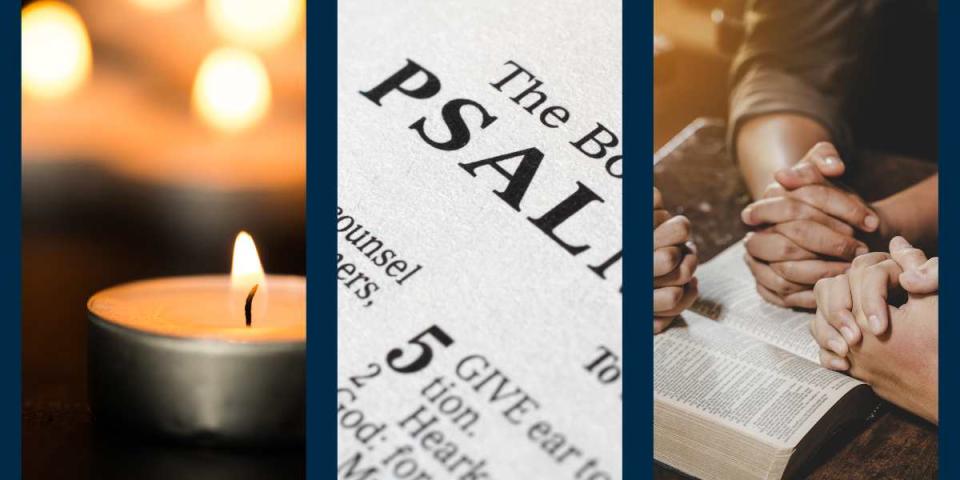
Be filled with the Spirit, as you sing psalms and hymns and spiritual songs to one another, singing and making melody to the Lord in your hearts.
(Ephesians 5:18c-19)
My name is Chris Dow and I’m honoured to serve as the new Chaplain of Wycliffe College. As a Wycliffe graduate, I’m thankful for the holistic theological training I received here and excited to play a part in the formation of the next generation of students.
As Chaplain, I will have oversight of the college’s worship life and will be involved in the growth and maturation of our students through classroom teaching, community-building, field education, leadership development, and pastoral care.
In all these areas, my primary focus will be the Psalms, as I believe them to be ultimate and irreplaceable resource for Christian discipleship, ministry training, prayer and worship.
The Psalms have always been foundational to Anglicanism and its tradition of daily prayer. But because they are the prayers and hymns that Jesus himself prayed and sang, they are also the prayer book and hymnal for the whole church, as represented in our ecumenically diverse student body.
Sadly, the Psalms have largely disappeared from worship in most churches, hence my determined focus to encourage their rediscovery. In the words of German Lutheran pastor-theologian Dietrich Bonhoeffer, whom we read in the first-year “Life Together” course, “Whenever the Psalter is abandoned, an incomparable treasure vanishes from the Christian church. With its recovery will come unsuspected power.”
One of the twentieth century martyrs, Bonhoeffer was formed and fortified for courageous Christian witness through his firm grounding in the Psalms, and we would do well to follow his example as we seek to bear witness to Christ in our own challenging times.
The Psalms give us words to bring the full range of our human emotions and experiences to God; and because they are the words of Jesus, we will become like him as we pray them. Bonhoeffer again: “Jesus Christ prays through the Psalter in his congregation.”
Why sing the Psalms, and not just say them? The Psalms themselves indicate that they were originally to be set to music. Singing is the glorification of our human life-breath and thus a more fitting offering to the Lord than merely spoken words. Singing is also a proven aid to memorization and thus the best way to sink the words of Scripture into our thoughts and imaginations to shape us as individuals and as a corporate body.
I invite you to join us in learning to sing the Psalms. To get you started, here are three very different styles of Psalm singing. For each one, follow the link to a playlist of YouTube videos with music and lyrics:
- For traditional Gregorian chant, check out these recordings of all 150 psalms from the St. Dunstan’s Plainsong Psalter. ·
- For a more modern style known as “Simplified Anglican Chant”, try these select psalms from the Theopolis Institute.
- Finally, if you prefer contemporary Christian music praise songs, check out The Psalms Project.
Regardless of which musical genre you prefer, the most important thing is to sing the Psalms! And by that, I mean the Psalms in the literal, inspired words of Scripture, rather than metrical paraphrases or songs with lyrics loosely based on the theme of a given psalm. Those alternatives can be good and godly expressions of praise, but they are not the Psalms as God intends for us to sing them.
Try them out and let me know what you think! I would love to be a support, not only to our current students, but to the wider Wycliffe community as well. You can reach me by email at chris.dow@wycliffe.utoronto.ca or by phone at 416.946.3540.


