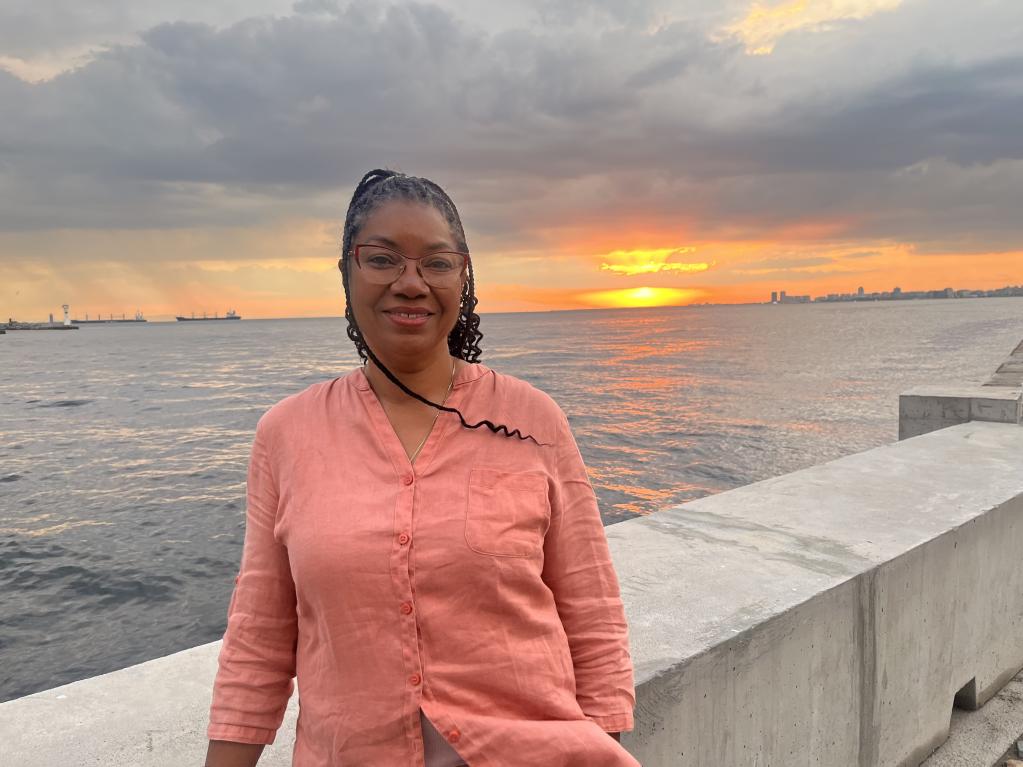
Myriam Dessables has no doubt she is where she needs to be. Recently retired from 30 years working at the United Nations, Dessables had decided to focus her time on theology studies which led her to take a master’s in theology at the University of Geneva, Switzerland.
“My Master’s thesis was on how 19th century women biblical interpreters portray three great women in the book of Acts—Dorcas, Lydia, and Priscilla,” she shares. “The book of Acts gives us a glimpse of what early Christianity looked like, and the important role women played in it. These three women were role models for 19th century women.”
That Dessables chose this focus is no surprise. Her years at the UN had given her opportunity to work with women around the world, and she knew that women’s issues would be touchstones in her research. “I was fortunate to work in several countries on women’s empowerment programs,” she says. “We sometimes take women’s empowerment for granted, when in fact, in many places in the world, women don’t have equal opportunities,” she says.
Encountering women characters with such a strong presence in the book of Acts touched Dessables. “Did these characters ‘talk’ to and inspire 19th century women biblical interpreters the way they’d talked to me?” she asks.
Her search for answers led her to Professor Marion Taylor’s impressive work on early women biblical interpreters. Indeed, she credits Prof. Taylor’s work for guidance and inspiration as she researched and wrote her thesis.
Dessables has just entered into her PhD studies at Wycliffe. Professors Stephen Chester and Marion Taylor will supervise her work which will focus on women biblical interpreters and their writing on Priscilla: “I hope to be part of the ongoing effort to recover the voices from the women of the past who had a deep reflection about the Bible and wrote about it.
Does Dessables miss the UN? “No,” she laughs. “ I miss my friends of course but the Holy Spirit brought me to Wycliffe. I am where I need to be right now. I have no doubts about that.”


