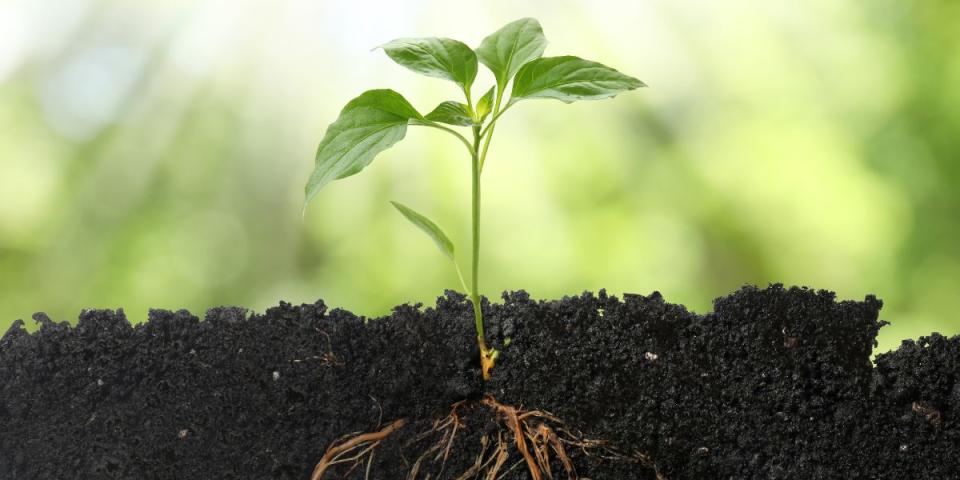
 The theme of this series, “Leaves That Do Not Wither,” invites us to consider what fruitfulness and resilience look like in seasons of deep uncertainty. Both Psalm 1 and Jeremiah 17 offer the image of a tree planted beside water, its leaves green even in drought. But there are important differences between the two passages. Psalm 1 begins with the blessed person who meditates on the Law day and night, while Jeremiah 17 begins: “The sin of Judah is written with an iron pen; with a diamond point it is engraved on the tablet of their heart.”
The human heart is meant to be like the Ark of the Covenant, the place where God’s Law is treasured and where His presence rests. But in Jeremiah 17, the heart has become defiled. Instead of Torah engraved by the Spirit, it bears the deep etching of idolatry and sin. Instead of the horns of the altar receiving atoning blood, they now bear testimony against the people whose children have been taught the ways of idols, rather than catechized in the ways of the Lord.
The drought of which Jeremiah writes is spiritual, generational, and moral — the drought of a heart that is no longer an altar aflame with the Spirit offering a living sacrifice to God.
A perennial temptation
This pattern repeats itself in every age. The church in any generation is tempted to trust in flesh rather than the Lord, to engrave rival loyalties upon the heart, and to pass down cultural idols more readily than the living memory of God’s deeds. The temptation is perennial.
Jeremiah then moves from this indictment of the sinful heart to the imagery of plants and trees: “Cursed are those who trust in mere mortals… They shall be like a shrub in the desert.” The shrub is poorly placed, poorly rooted, exposed, unprepared. It “shall not see good when it comes.” It cannot even recognize God’s blessing.
Psalm 1 offers a parallel image: the wicked are like chaff driven by the wind—weightless husks separated from the grain, without substance, direction, or worth. Jeremiah’s desert shrub and the psalmist’s chaff portray lives without depth, without stability, without the hidden strength that can endure heat and drought.
The contrast here is not between good circumstances and bad. Rather, it points to how one is rooted—living near water or in salt land, trusting in the Lord or trusting in flesh. Deep roots or none at all.
Having shown us the barren shrub, Jeremiah now paints the opposite picture: “Blessed are those who trust in the LORD, whose trust is the LORD. They shall be like a tree planted by water…”
Not a feeling, but a root system
Trust, in Jeremiah’s vision, is not a feeling but a root system. It is the hidden, underground network by which the tree draws life from a water source beyond itself.
The defining feature of the blessed person is preparedness for testing. When scorching heat comes, the tree is not anxious. When drought arrives, it draws more deeply from its wellspring. It continues to bear fruit, its leaves remaining green. These are signs of resilience, shelter, and grace in a dry land. For Christians, we are “rooted and grounded in Christ,” nourished by the living water of His Spirit, sustained by the One who writes His Law upon the heart.
Returning to the image of the heart, Jeremiah then offers a sobering diagnosis of why drought feels so persistent: “The heart is deceitful above all things and desperately sick; who can understand it?”
We cannot fully discern our own hearts, but God can. God searches, tests, reveals, and heals. Psalm 139 echoes this truth: “Search me, O God… lead me in the way everlasting.” And 1 John 3 adds: “God is greater than our heart.” Our stability, resilience, and fruitfulness are not self-generated. They come from entrusting our hearts to the One who understands them fully.
Jeremiah writes from personal experience. Verses 12–18 are the prophet’s own cry—a lament from someone who has been faithful, but whose faithfulness has cost him dearly. He clings to God as his refuge, his sanctuary, and his hope. Jeremiah is himself the tree of verses 7 and 8: the heat has come, the drought is real, and yet he remains rooted.
Green leaves in seasons of drought
And then comes a line that speaks with unusual force to anyone in ministry: “But as for me, I have not hurried away from being a shepherd” (verse 16). Jeremiah acknowledges the temptation to quit. He feels the weight of his calling. He knows the loneliness of leadership. He has tasted the discouragement of speaking hard truths to people who do not want to hear them.
This weary yet determined faithfulness is a green leaf in a season of drought.
Many pastors today know this feeling intimately. Some are quietly contemplating stepping away from ministry. Some are exhausted, discouraged, or unsure how much longer they can continue. Jeremiah’s words come from one who understands the cost of shepherding and who clings to God amid vocational drought.
Jeremiah’s rootedness points beyond himself. His steadfastness anticipates the true and greater Shepherd who did not hurry away from his calling, even when it led Him into the deepest drought of all.
Christ is the blessed man of Psalm 1, the tree planted by streams of living water, whose delight in the Law is perfect, whose trust in the Father was unbroken, whose fruitfulness never failed. And yet, in His crucifixion, He becomes the tree shorn of its branches and leaves—the righteous one cut down, exposed to the scorching heat of judgment, bearing in His own body the iniquity of all deceitful hearts. The cross is the tree in the salt land, the place where the blessed man enters our barrenness so that His life might take root in us.
Because He thirsted, we are given living water. Because He bore our drought, we bear His fruit. Because His tree was laid bare, our leaves are made green in Him.
By His resurrection, His ascension into heaven, and His promise to come again in glory, the story of redemption comes into full bloom. The tree of life stands at the centre of the New Jerusalem, “with its twelve kinds of fruit… and the leaves of the tree are for the healing of the nations.” The green leaves of Psalm 1 and Jeremiah 17 find their fulfilment here: not merely resilience in drought, but restoration, wholeness, and the healing of all creation. Our ministries, our vocations, our seasons of uncertainty are held within this larger story. We are invited to be rooted and grounded in Christ—the One whose leaves never wither, whose fruit never fails, whose life flows like a river through the dry places of our hearts.
In Him, leaves can remain green in drought, and from barren places shoots can bud with new life.


